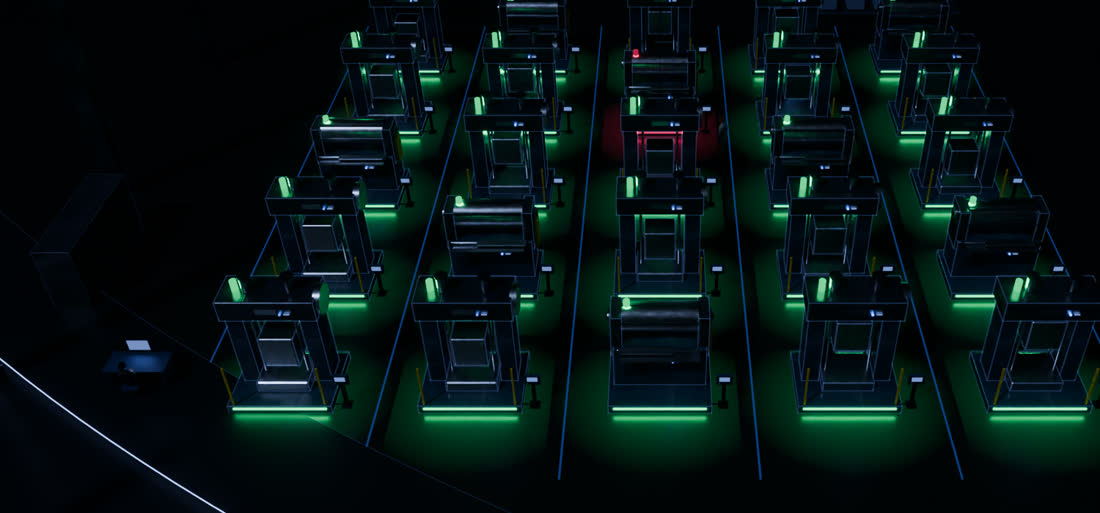
Live machine output
What every machine has made, this minute. It comes straight from the machine, stored the moment it happens.
For factories that mass-produce on 20–50 machines
A sensor on every machine, a real cost on every unit, and the few things that need a decision brought to you. Your day is yours again: spend it growing the business, or away from the factory altogether.
A small box on the outside of the machine. A plug point and a WiFi signal. Nothing opened, nothing drilled, nothing rewired. That is the whole installation.
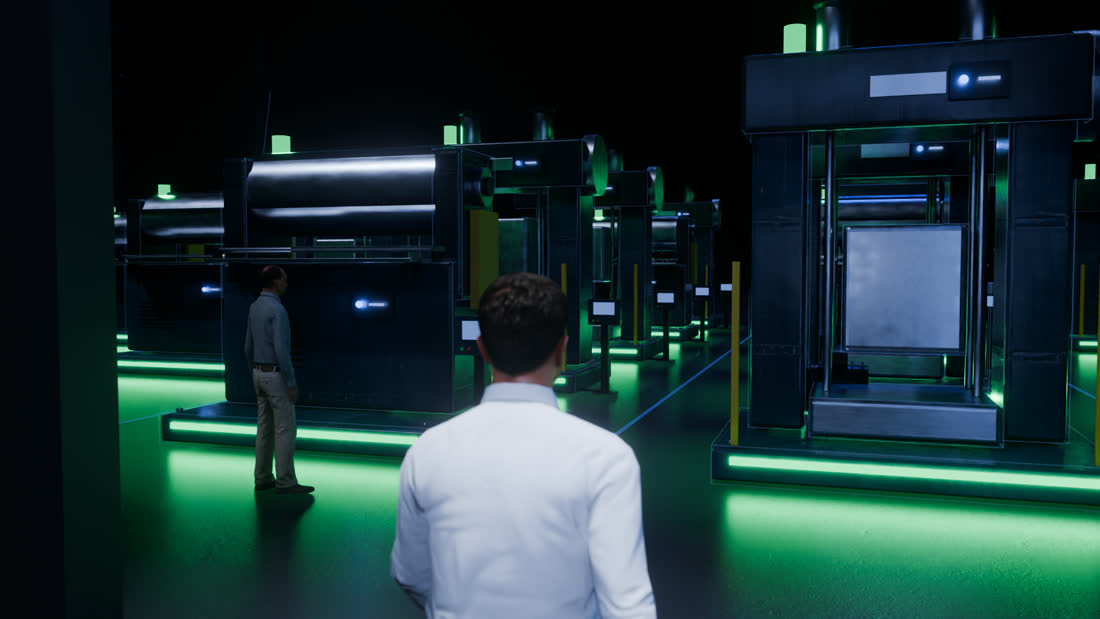 Machine 04 stopped, 14 min
MACHINE 04 has been down fourteen minutes. Belt slip, same as Tuesday. Shall I raise it with maintenance?
₹61margin not made while it stands
Production machines · continuous-run · packaging · rope & twine · wire & cable · extrusion · moulding · press shops · CNC · foundry · knitting
The short version
Not how it works. One owner's day once it is running: the what, the why and the action to take all come to him.
Film in production
3 minutes 49 seconds · with sound
Blitz is a voice-first, always-on AI agent, with digital twin capabilities, that deciphers your business from material to money. In plain words: you talk to it, it watches all day, and it tells you what needs you.
Try this tomorrow
“Is machine 4 running?” “How much did the night shift make?” “Did the material arrive?”
Count them tomorrow. Blitz makes every one of those calls unnecessary.
How it works
Nothing on the floor changes. No operator learns a new routine. The machines keep doing exactly what they did yesterday, only now they say so. The machines report for themselves, so nobody has to report on anybody.
A small non-invasive sensor goes onto the machine you already own. No rewiring, no PLC, no hole drilled in anything. It reads the machine's own movement.
Every metre, kilo or part is stored the moment it is made, never guessed at the end of a shift. Then material, power, labour and machine hours are put against it.
You stop going to look. Jarvis pushes what needs you (a machine down, stock short, money overdue, an order slipping) and answers anything you ask, by text or voice.
What it measures
All six run off the same measured record: what the machine actually did, and the paperwork that actually arrived. Nothing here is typed in at the end of a shift.
What every machine has made, this minute. It comes straight from the machine, stored the moment it happens.
Every stop, how long it lasted and what it cost you in margin, not in vague "lost hours".
Rupees per metre, per kilo, per part: material, power, labour and machine hours, per product and per customer.
kWh and rupees per unit, not per bill, at the end of the month, for the whole plant at once.
Photograph the supplier's bill at the gate. Blitz reads it, a person approves it, and stock and costs get the same numbers. Your books stay where they are: Blitz reads Tally, or the ERP you already use, and never writes to it.
Ask it what machine 12 did last night, or what you are still owed. Same question box, by text or voice. It answers from the measured record, and tells you what needs you before you think to ask.
True cost
Not an average across the plant. This metre, on this machine, for this customer, with the power it drew and the hours it held the machine.
Most systems spread the factory's overhead over the metres you made. On our own floor that made one machine's output look like ₹5 a metre when it was really ₹22. The machine that ran slow and long was carrying the same share as the one that ran fast. Blitz splits overhead by the machine time a product actually used.
And it never adds 12,400 metres to 3,200 pieces. Two different things are two numbers. If an input is missing (a thread nobody has priced, a machine nobody has metered), Blitz names it instead of guessing at it, so the number you quote from is one you can stand behind.
An ERP can show you cost per unit too. It shows you what somebody typed. Blitz shows you what the machine did.
You re-quote the customer who has been quietly unprofitable for two years. You move a product off the machine that eats power and onto the one that does not. You stop taking the order that looked big and made nothing.
None of that is a new idea. It is simply not possible while the cost per metre is a guess made at the end of the month, from a sheet somebody filled in at the end of a shift.
Jarvis
Jarvis sits on top of everything Blitz has measured. It raises what needs you without being asked, and answers in the language you would use with your own manager. Each message carries the what, the why and the action to take, so deciding takes you minutes, from wherever you are.
MACHINE 04 stopped fourteen minutes ago. That is about ₹61 of margin not made, and it is the third stop this week, all on the same belt.
Sample conversation, with sample figures. Jarvis answers from your factory's own measured record (production read straight from the machines and the paperwork that actually arrived), not from numbers somebody typed.
The difference, in a day
Not what the software does. What the day does.
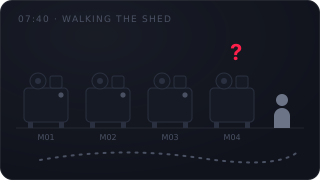
You walk the shed to see which machines are turning.
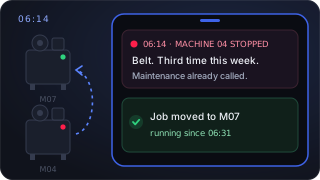
You knew at 06:14: Machine 04, belt, the third time this week. The job it was holding is already running on another machine.
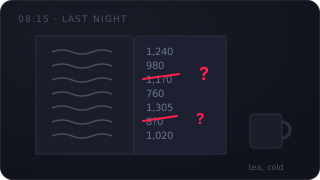
You read last night's register and chase the crossed-out figures.
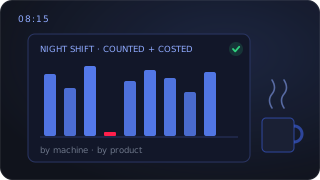
There is nothing to read. Last night is measured and costed. You open the shift and see what it made, by product and by machine, before your tea goes cold.
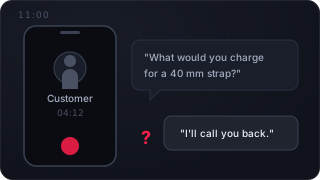
A customer asks your price for something you have never made. You say you will call back.
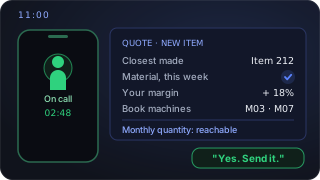
You quote him on the call: his material, the machine time at what your machines cost an hour, your margin on top. He says yes while he is still on the phone.
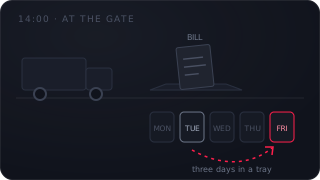
A bill arrives at the gate. Accounts see it on Friday.
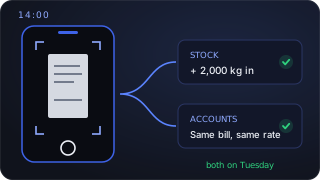
It is photographed at the gate. Stock and accounts get the same numbers the same day, and that rate is in today's costs, not next week's.
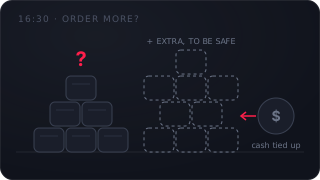
Is there enough material for the month? You order extra to be safe.
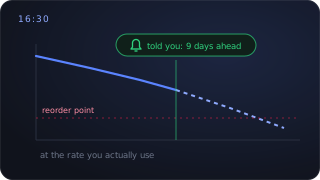
You were told nine days ago, at the rate you are actually consuming, so you buy what the month needs, and the cash stays in the business instead of tied up in material you did not need yet.
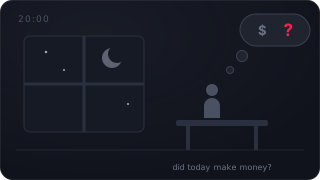
At home, still not knowing whether today made money.
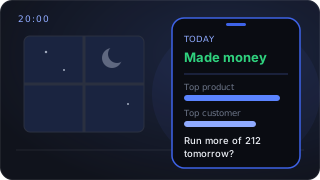
You know what today made, and which products and which customers made it. The only thing left is deciding what to run more of tomorrow.
By eight that evening the right-hand column has handed you an order won on the phone, a machine put back to work the same morning, a month's material bought to what you actually use, and the day's profit in front of you. The day stops being one you manage and becomes yours: to grow the business in, or to spend away from it.
Same factory. Same nine machines. Nothing in the right-hand column was asked for.
And then what
A customer rings and asks for something you have never run. Today you quote from feel, or you pass. Tell Blitz the raw material in one unit and how fast your machines would make it. It prices the machine time at what an hour on those machines costs you, adds packing, transport and your margin. Or simply ask Jarvis, while he is still on the phone.
Where an input is missing, it names it instead of guessing.
Blitz finds firms that buy what you make, leaves out the ones you already deal with, writes the first email in your own words, sends it, and keeps a note of who you wrote to and when, so twenty enquiries do not become twenty evenings.
The same search works the other way, for a cheaper supplier.
Why it pays
Independent research on this class of system (machine monitoring plus costing) reports the following. These are not our results; they are the range the studies found.
Sources: McKinsey (2022); Aberdeen. Ranges are for the category of system, not a measured outcome at any particular factory. Blitz is built and run in a working factory of our own, not in a lab.
We set it up: sensors, hosting, all of it. Start with one shed, and see your own machines reporting for themselves, in your own units, in your own currency.